Reading
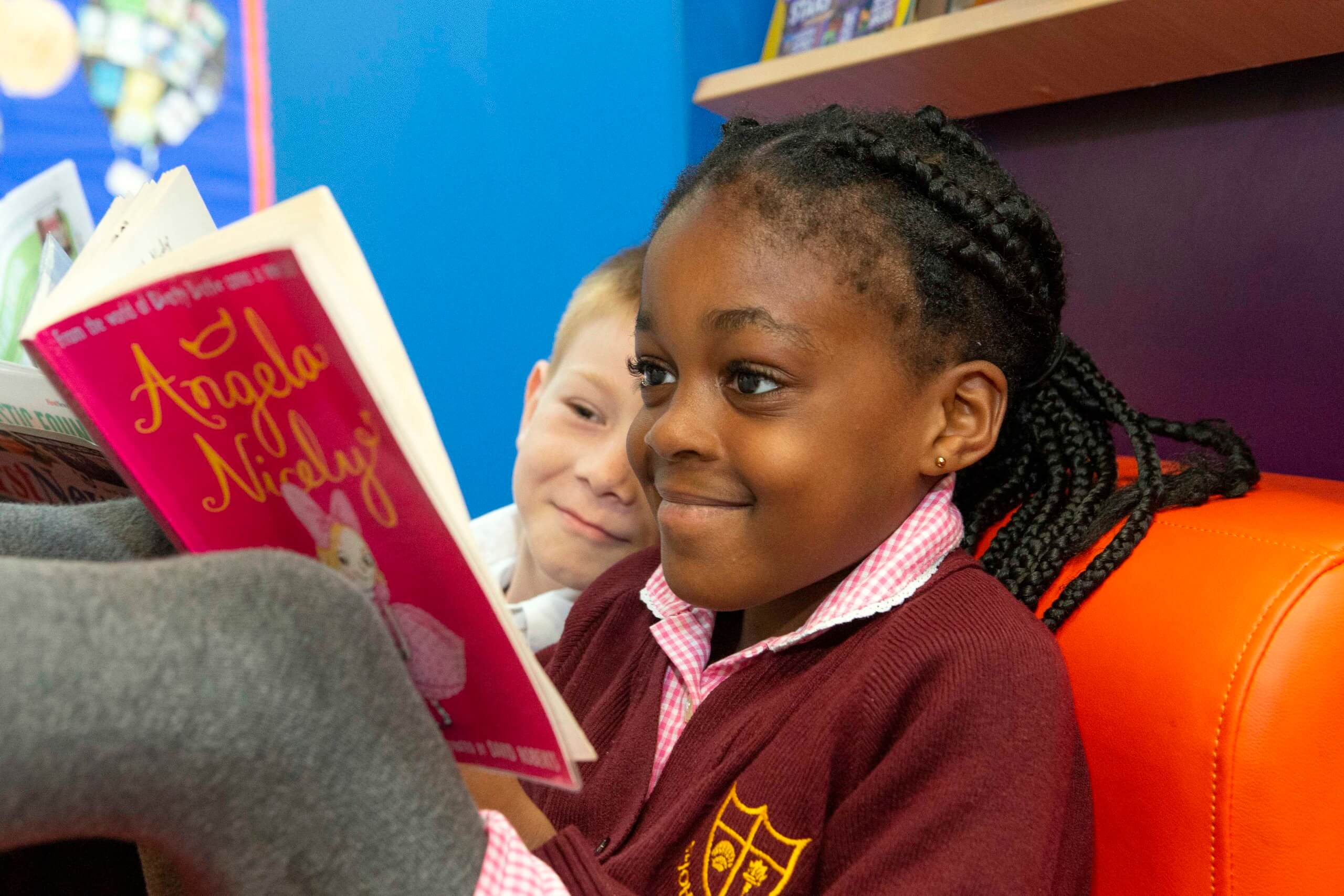
Every day at St John and St James, children take part in a carefully planned reading session. They work in groups in a highly structured reading programme led by skilled, trained adults. Reception and KS1 Classes also have daily phonics lessons. We use Read, Write, Inc Oxford Reading Tree resources in school to support progression in reading. Children in reception and key stage one will be given a matched Book Bag book to take home in line with their individual stage of development.
Reading Curriculum Intent
Click on the titles below to expand each section.
Reading in KS1
Independent practice half term
At St John and St James we have implemented a new phonics scheme since September 2019. Read Write Inc is a literacy program used to teach reading. This has been developed by Ruth Miskin to provide a structured and systematic approach to literacy and reading. Read Write Inc was created and designed to develop fluency and accuracy in reading. The aim of the program is for children to move quickly as possible into higher reading level groups, where they become confident readers and can self-select their own books and read completely independently.
Read Write Inc starts from our Nursery which encourages our younger children to be exposed to sounds and early reading at a very young age. This is then built on into Reception and KS1.
Children learn various skills to help and encourage them to read in an exciting way by learning to blend with Fred the puppet, decoding words like robots and developing their comprehension through short fun stories. As part of the program children read alien (nonsense) words which are phonetically decodable including being able to make up their own alien names which continues to develop their understanding of sound blending knowledge. Read Write Inc provides a close link to writing opportunities where they become more confident writers.
Read Write Inc is also used to support those new to English as well as children who may need extra support with reading.
All staff who teach Read Write Inc have regular coaching and are highly skilled in teaching phonics.
Please click on the link below for further information on Read Write Inc.
 Remember to always encourage your child to talk about reading, ask them what sounds they learned, share endless stories with them at home and never forget to praise them!
| RWI at home | |
| Set 1 | |
| Special Friends | |
| Set 2 | |
| Set 3 |
Reading in KS2
In Key Stage 2, children build on what they have learnt in RWInc and apply this knowledge to more complex texts. They take part in daily reading lessons, which focus on pupils’ inference and speaking and listening skills through whole class high quality core texts. Pupils work through a range of genres to practise the key reading skills, which develop fluency and confidence over time. Explicit academic and technical vocabulary are taught in every lesson. Pupils are encouraged to use what they have learnt in reading in other subjects.
Where children require additional support for reading in Key Stage 2, we have small reading groups. These sessions are matched to the pupils’ chronological reading ages: some will focus on decoding and reading at a sentence level, some will focus on fluency, and some will focus on developing early comprehension skills. These groups teach explicitly the skills that pupils need to be ready for the whole class reading sessions. In addition, for a small number of pupils, we continue RWInc tutoring where it is needed. This supports pupils who need a little extra support to secure their phonics skills.
Home reading
There are lots of resources available for pupils to use to develop their reading skills and their love of reading. Both are important: pupils need to continue practising ‘how to read’ in KS2 whilst also learning to love reading. This will give pupils the skills and cultural capital they need to flourish now, in the next stage of their education and in the wider community. All children will have a minimum of 2 books to read from school, one library book and one matched reading book; please speak to your child’s class teacher if you have any queries about this.
Accelerated Reader
All children in KS2 have matched age reading books to read from the school library. They read these books at home and for early morning work each day. They then use school devices to complete online comprehension quizzes about the books that they have read. Completion of the comprehension questions, supports the development of pupils’ retrieval and inference skills. Please speak to your child’s class teacher if you need their login details.
Comprehension Questions
When reading with your child at home, ask them the following questions or similar questions to help develop their comprehension skills alongside their fluency.
- Look at the front cover. What could the book be about? How do you know? Who is the author? What is an illustrator? What do they do?
- What does that word mean? Read around the word to help you work it out (context).
- Use your phonics to help you read that word. Can you break it down and then blend it together?
- What do you think will happen next? Why?
- How do you think that character feels? Why? How would you feel in that situation?
- Can you predict how the book will end? What clues do you have for your prediction?
- Is there a hidden message in the story? How do you know?
- Could you summarise the story in your own words?
Books for Topics
If you would like ideas for high-quality books for your child to read at home, have a look at the links below. The ‘Books for Topics’ website has a wide array of book lists, organised by age (e.g., Year 1, Year 2, etc.) and by theme (e.g., Egyptians, rivers, etc.). We have a lot of these books in school but the lists are a good starting point for when visiting a local library or purchasing books for home.
Booklists by age: https://www.booksfortopics.com/key-stage-book-lists
Booklists by topic: https://www.booksfortopics.com/topics